












Your cart is empty
Pick a product to get started. Design it online or upload your own file.
Browse all productsShop by product
Need something custom? Request a quote


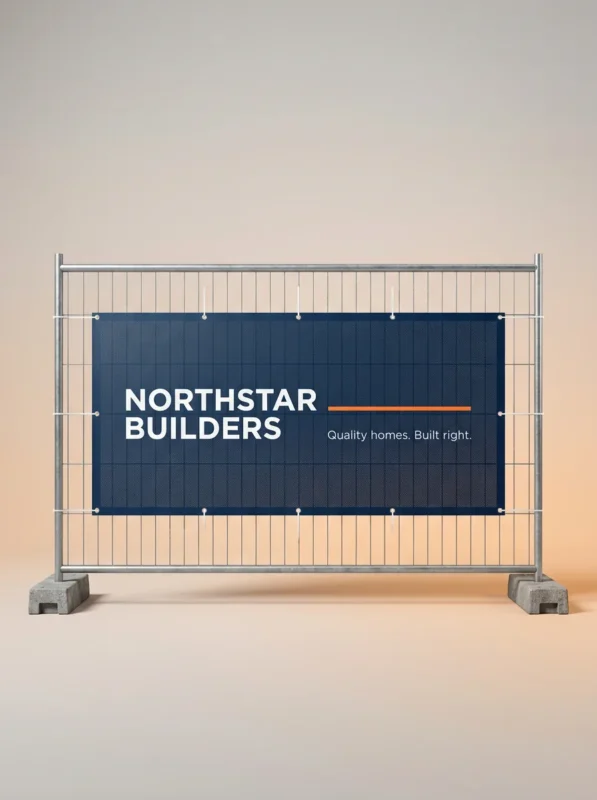
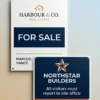
Good construction site signs do two jobs. They tell the public who is running the site and how to reach you, and they put your name in front of everyone who drives past. Here’s what a builder’s sign needs to show, which signs suit which job, and how to get them printed so they last outdoors.
On larger jobs, the principal contractor has to put up a sign that can be read from outside the site. Under the work health and safety rules used in most states, that applies to construction projects worth $250,000 or more. In Victoria, the OHS Regulations set the threshold at $350,000.
The sign generally needs to show:
Some states also ask for licence or registration details on site signs, and in Victoria building permit information must be displayed too. Rules differ between states and change from time to time, so check with your state’s safety regulator or your industry association before you print.
Tip: design one board for every site
Set up one master design with your logo, name and phone numbers, and leave a clear panel for the site address, permit number or supervisor’s name. Then you only change a few lines for each new job.
Corflute signs are made from strong 5 mm fluted plastic. They’re light, waterproof and made for outdoors, with an eyelet in each corner so they go up fast on a fence, a post or a hoarding.
| Corflute size | Good for |
|---|---|
| 600 x 450 mm | Safety notices, gate signs, “site office” and directional signs |
| 600 x 900 mm | The main builder’s sign on smaller residential jobs |
| 900 x 1200 mm | Project boards on busy roads and larger sites |
All three come in portrait or landscape, and you can order from a single sign up to several hundred for a whole fleet of sites.
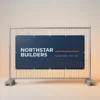
Temporary fencing runs along the street for months. A mesh banner turns it into advertising for your business. Mesh lets the wind pass through, so the banner stays flat and puts less strain on the fence than a solid banner would. Ours come finished with eyelets all round, ready to tie on.
Measure your fence panels before you order, and choose a banner a little smaller than the panel so you have room to tie it off.
Safety signs in Australian workplaces follow AS 1319, which gives each colour a fixed meaning. If you design your own, don’t swap in your brand colours.
| Colour | Meaning | Example |
|---|---|---|
| Red | Danger, prohibition or fire equipment | No unauthorised entry |
| Yellow | Warning | Overhead work |
| Blue | Something you must do | Hard hats must be worn |
| Green | Emergency and first aid information | First aid, assembly point |
Site signs bring in the calls. These help you win the job once someone rings:
Signs for your next site
Pick a size, start from a ready-made template or upload your own artwork. Printed in Australia.
See everything builders and agents use in our real estate and construction range.
600 x 900 mm suits most residential sites. Go to 900 x 1200 mm for busy roads or bigger projects, where people read it from further away.
Yes. Corflute is a plastic board, so rain doesn’t soak in or warp it. It’s the standard material for site, real estate and election signs.
Fine mesh has smaller holes, so artwork looks sharper. Open mesh has bigger holes and lets more wind through, which suits exposed, windy sites.
This article is general information only. Site sign requirements vary by state and project, so check with your state’s work health and safety regulator for what applies to you.
Appointment cards, letterheads, patient brochures and waiting room posters for medical, dental and allied health clinics, plus the Ahpra advertising rules to keep in mind.
Read the guideWhat real estate agents should print at each stage of a campaign, from just sold postcards and for sale signs to property brochures and open home banners.
Read the guidePDF, CMYK, 300 dpi, 3 mm bleed, a 3 mm safe zone and embedded fonts. The six things every print-ready file needs, explained in plain English.
Read the guideDesign it online
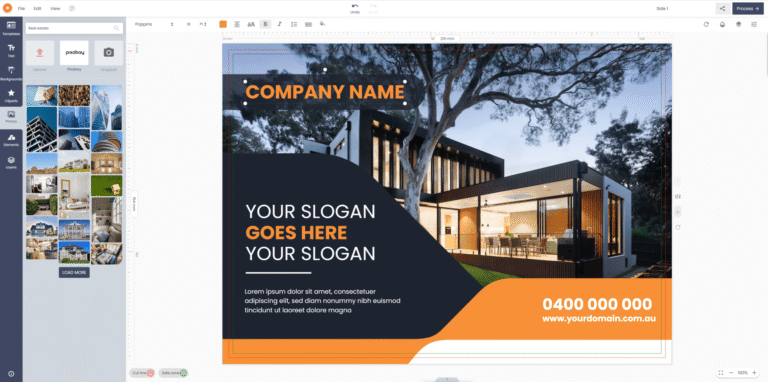
Pick a product, choose a template and make it yours. Bleed and safe zones are already set up. Printed in Australia.