







Your cart is empty
Pick a product to get started. Design it online or upload your own file.
Browse all productsShop by product
Need something custom? Request a quote


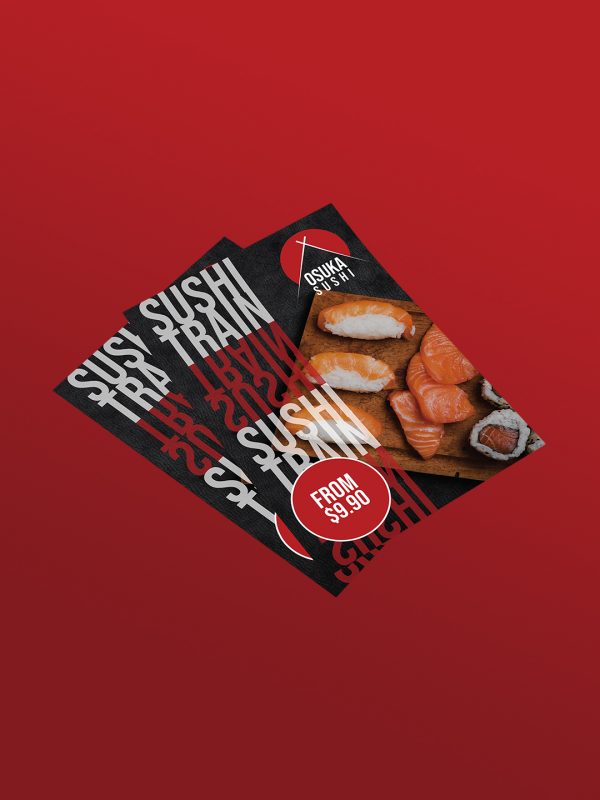
The right flyer size comes down to two things: how much you need to say, and how people will get it. Here’s how A4, A5, A6 and DL compare, and a quick way to pick.
| Size | Millimetres | Best for |
|---|---|---|
| A4 | 210 x 297 mm | Menus, price lists, detailed offers, noticeboards |
| A5 | 148 x 210 mm | Letterbox drops, events, everyday promotions |
| A6 | 105 x 148 mm | Handouts, counter stacks, parcel inserts |
| DL | 99 x 210 mm | Mail-outs, display stands, rack cards |
Each size in the A series is exactly half the one above it. Fold an A4 in half and you get A5. Fold that in half and you get A6. DL is the odd one out: a tall, slim size made to fit a standard DL envelope.
A4 is the same size as a sheet of office paper. It gives you space for a full menu, a price list, or an offer with all the details. It’s also the size that gets noticed on a noticeboard or in a shop window.
The trade-off is that A4 is too big to hand out easily. People fold it or leave it behind. Choose A4 when the flyer will be pinned up or read at home, like a takeaway menu on the fridge.
If you’re not sure, start with A5. It’s big enough for a strong headline, a photo, a few key points and your contact details. It’s small enough to slip into a letterbox or hand to someone without it getting crumpled.
A5 is the go-to for letterbox drops, local events, open homes and seasonal sales.
A6 is postcard size. It’s cheap to print in bulk and easy to leave in a stack at the counter, tuck into an order or hand out at a market stall.
Keep A6 simple. One message, one offer, one call to action. If you find yourself shrinking the text to fit, step up to A5.
DL is a third of an A4 page. It slides into a standard DL envelope without folding and sits neatly in brochure racks and display stands at reception desks.
The tall shape suits a list of services, opening hours or a step-by-step offer. It’s a favourite for tradies, clinics, gyms and real estate agents.
Quick pick
All our flyers can be printed on one side or both. A double-sided flyer lets you keep the front clean and bold, with the detail on the back. It’s often a better result than squeezing everything onto one side of a bigger sheet.
If you’re trying to fit a full service list, a catalogue or a property feature onto one flyer, a folded brochure might suit you better. A Z fold or roll fold A4 brochure folds down to DL, so it still fits an envelope or a rack.
Pick your size and start designing
Every flyer size has ready-made templates in our online designer, with bleed already set up.
A5 (148 x 210 mm) is the most common choice. It balances space for your message with being easy to hand out and post.
99 x 210 mm. It fits a standard DL envelope without folding.
3 mm on every side. An A5 flyer with bleed is 154 x 216 mm.
Appointment cards, letterheads, patient brochures and waiting room posters for medical, dental and allied health clinics, plus the Ahpra advertising rules to keep in mind.
Read the guideWhat real estate agents should print at each stage of a campaign, from just sold postcards and for sale signs to property brochures and open home banners.
Read the guideWhat a builder's sign needs to show, which corflute and mesh banner sizes suit your site, safety sign colours, and design tips for signs people can read from the road.
Read the guideDesign it online
Pick a product, choose a template and make it yours. Bleed and safe zones are already set up. Printed in Australia.